


The Moon And Sixpence
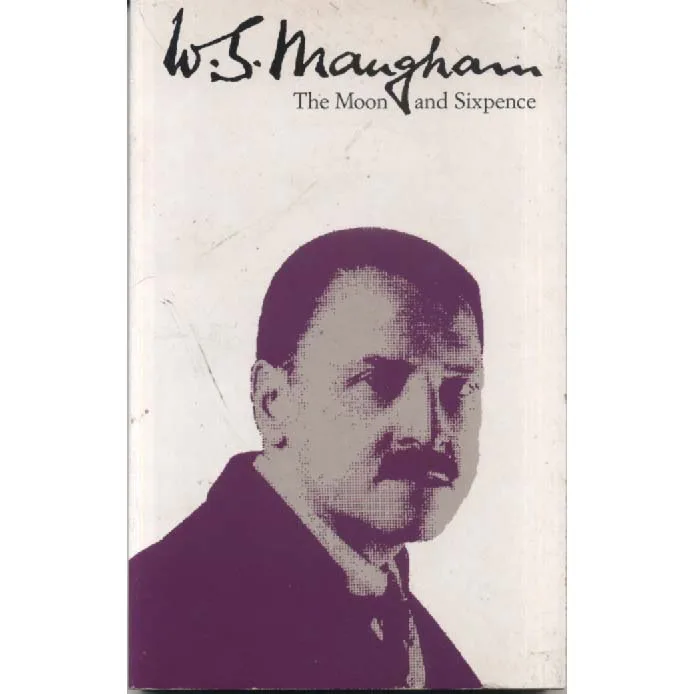
Publisher: Mandarin
Format: Paperback
ISBN: 9780749303433
Some novels concern themselves with sensible people making sensible decisions in a sensible world. The Moon and Sixpence is not one of them. W. Somerset Maugham’s sharp, strange, and enduringly unsettling tale is what happens when a man looks at ordinary life, decides it is all unbearably provincial, and walks off in pursuit of something far less practical and considerably more destructive.
First published in 1919 and reissued here in this 1990 Mandarin edition, The Moon and Sixpence remains one of the great novels about art, obsession, and the catastrophic inconvenience of genius. Inspired loosely by the life of Gauguin, it tells the story of Charles Strickland, a man who abandons respectability, family life, and every last social obligation in order to paint. Not because he has a plan, or because it would be nice to “find himself,” but because something inside him has decided that ordinary existence is no longer remotely acceptable.
It is hard not to admire the sheer audacity of that premise, even while recoiling from the man himself. Strickland is not presented as a cuddly visionary with soulful eyes and a noble scarf. He is abrasive, selfish, cold, and thoroughly inconvenient to everyone around him. In modern terms, he would be an absolute nightmare. Yet Maugham, with that dry and beautifully controlled prose of his, compels the reader to keep watching. What if genius is not charming? What if artistic greatness is not accompanied by good manners, emotional intelligence, or basic decency? What if the price of beauty is paid by everybody else?
That is the peculiar brilliance of this novel. It has all the ingredients of a bohemian romance, yet it refuses to become one. Paris appears, Tahiti appears, art appears, but Maugham does not let any of them soften into decorative myth. Instead he gives us the awkward, unpleasant possibility that greatness may be real and still arrive in the form of a man one would very much prefer not to have to sit next to at dinner.
There is also, of course, that title. The Moon and Sixpence is one of literature’s great acts of elegant shorthand. The sixpence is the ordinary world, the practical coin at your feet, the respectable business of getting on. The moon is the impossible, the irrational, the beautiful thing pursued at enormous cost. Most of us, sensibly enough, spend our lives somewhere near the sixpence. Strickland barely glances at it. He is after the moon, and if a few lives are crushed underfoot in the process, well, that is apparently a secondary matter.
Maugham handles all this with remarkable coolness. He is never shrill, never melodramatic, never in too much of a hurry to tell you what to think. Instead he lays out the facts, the people, the choices, and lets the unease do its work. The result is a novel that feels both very readable and faintly dangerous. It asks questions many people prefer not to ask too loudly. Is talent worth any personal cost? Must art justify the suffering it causes? Are some people simply built to reject ordinary morality in the service of creation? Cheerful stuff.
This Good copy from Crappy Old Books is a fine way to encounter one of Maugham’s most famous and troubling novels. The Mandarin edition is eminently readable and nicely suited to the reader who enjoys fiction with intelligence, bite, and a willingness to stare directly at the less attractive side of human ambition. It is the kind of book that looks modest enough on the shelf, only to leave you an hour later wondering whether civilisation is really just a fragile arrangement designed to stop more people behaving like Charles Strickland.
In short, The Moon and Sixpence is a lean, elegant, acidly intelligent classic about art, obsession, and the alarming possibility that true vocation may have very little interest in being kind. A splendid choice for readers who like their literary fiction sharp, unsettling, and quietly amused by the chaos of human desire.
Available from Crappy Old Books, where even the moon can sometimes be had for considerably less than sixpence.
Keep browsing: See more Fiction books Other books by WS Maugham
